(Cross-posted at the CSDP Election Blog. Extra note below.)
Every morning one of my friends IMs me to say either, “We’re winning!!!!” or “We’re losing :( :(.” He bases these conclusions on websites such as electoral-vote.com, which aggregate polls and produce a point estimate of the presidential electoral vote. While I’m sure my friend enjoys following the ups and downs of tracking polls (as sports fans enjoy watching games instead of just reading box scores), his ultimate question is who will win the election, not who is currently ahead.
But how well do current polls predict the outcome of the election? Professors Andrew Gelman and Gary King addressed this question in their 1993 work and found that polls are very poor predictors of the final vote. They even went so far as to call voters’ responses to pollsters “not “rational.” Wild swings in polling returns during conventions or after candidate gaffes often do not translate into long-term effects.
A recent survey by the University of New Hampshire raised the possibility that pollsters, not citizens, are to blame for these poll fluctuations. UNH asked half of respondents the standard preference question:
<blockquote>”Suppose the 2008 presidential election was being held today and the candidates were John McCain and Sarah Palin, the Republicans and Barack Obama and Joe Biden, the Democrats. Who would you vote for?”</blockquote>
These voters slightly supported Obama (46% to 45%), with 8% undecided (and 1% not responding). The other half of respondents were asked a seemingly similar question:
<blockquote>”Thinking about the presidential election in November, would you vote for: Republicans John McCain and Sarah Palin, Democrats Barack Obama and Joe Biden, someone else, or haven’t you decided yet?”</blockquote>
While the vote margin for these respondents was approximately the same (McCain +1), the percent of undecideds more than doubled, to 20%. This finding underscores the facts that citizens realize they might change their mind before the election, and that polls are just snapshots in time, limited in their ability to predict outcomes.
The mantra that “polls are just a snapshot” has been repeated often. And often, polls are used appropriately. For example, snapshot polling is helpful in determining who is benefiting from current events, or the effectiveness of a shift in campaign messaging (examples here, here, and here).
On the other hand, websites (some examples here) have no business tallying the electoral vote before the election. Who has “won” the September 25th electoral vote has no bearing on public policy, and provides noisier estimates of candidate momentum than so the current snapshots of the popular vote.
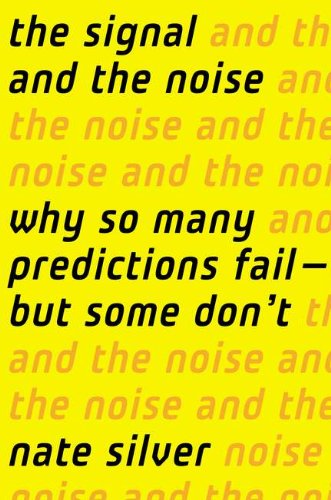
One of the smartest applications of polling (from a campaign junkie’s perspective) is to analyze which states are “pivotal” (i.e., the closest state that tips the election–FL in 2000 and OH in 2004). If you have followed Nate Silver’s analyses on 538, you may have noticed how Obama’s win percentage (top left of the homepage) fluctuated during the conventions, while the list of pivotal states (middle right) barely moved. The analysis of pivotal states has two great features: (1) it provides campaigns with actionable intelligence about where to direct their resources, and (2) it is much less vulnerable to the minute-to-minute fluctuations of the news cycle.
So the next your preferred candidate is behind by more than the percent of undecideds, instead of freaking out, remember that a large chunk of the electorate is still persuadable. And then channel any remaining nervous energy into volunteering in the nearest battleground state.
[Addendum on this site only, since I was over CSDP’s word limit: Yes, Gelman and King address the issue of question wording (page 426). They verify that question wording does not affect the percent of the two-party vote as measured by polls (and I agree that there is little effect). But, I think that question wording and the level of undecideds goes directly to the heart of their claim that voters are not behaving rationally. A voter bouncing back and forth between preferring one candidate and being undecided is more reasonable than the picture Gelman and King paint of the electorate swinging wildly between the two candidate.]